


Beyond the Backlink: The Definitive Guide to Contextual Links and True SEO Authority
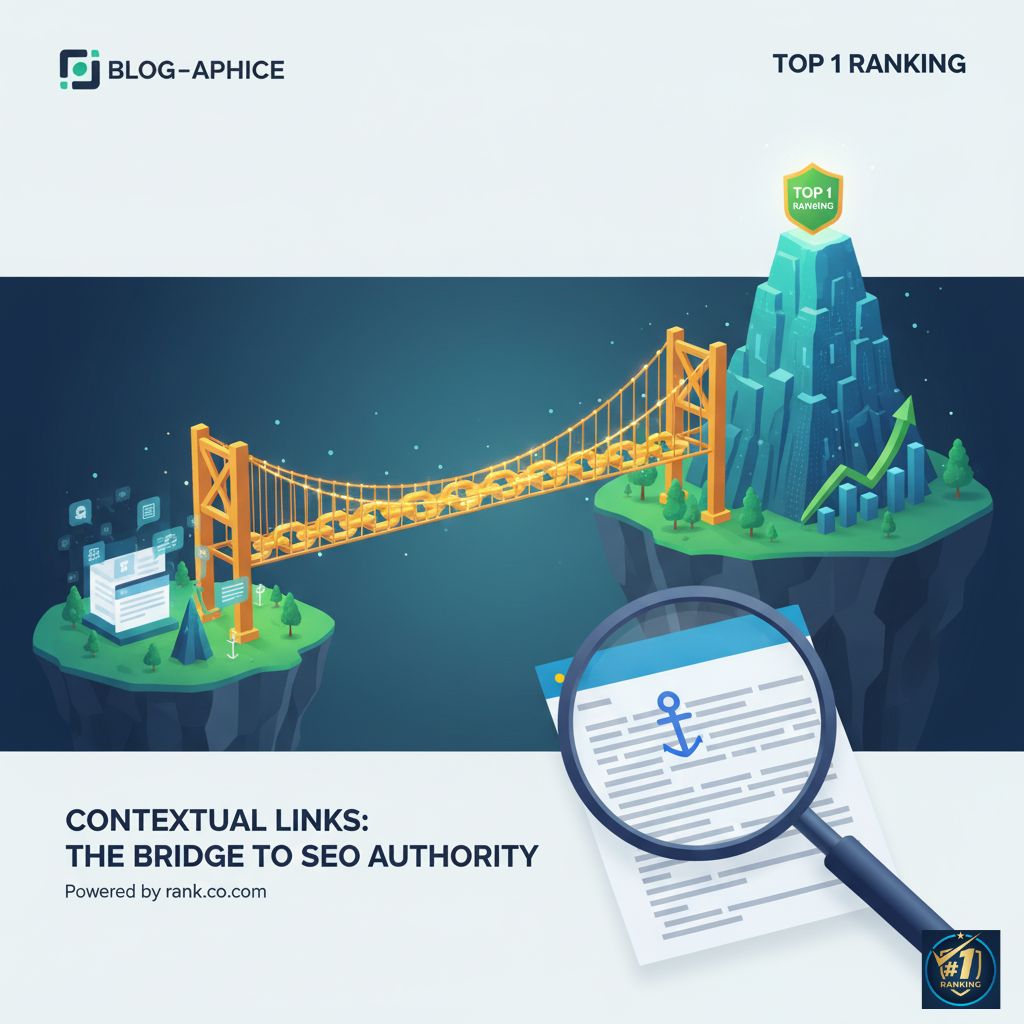
The “More is More” Myth That’s Killing Your SEO
In the world of Search Engine Optimization (SEO), there’s one piece of advice you’ve heard a thousand times: “You need more backlinks.”
This advice has launched a thousand spammy, low-value “link-building” services that promise to get you 50, 100, or 500 links a month. Business owners, desperate for results, buy into this “more is more” myth. They get their spreadsheet full of links… and nothing happens.
No increase in traffic. No jump in rankings. No new customers.
Why? Because they’ve been sold a lie. The truth is, in today’s sophisticated search landscape, most backlinks are worthless.
Google’s algorithm is no longer a simple popularity contest. It’s a complex, nuanced engine that understands intent, relevance, and, most importantly, context.
Welcome to the new standard of SEO. We at rank.co.com believe in this standard. We don’t just build links; we build authority. And that authority rests on one core, non-negotiable principle: the contextual backlink.
This isn’t just another buzzword. It’s the fundamental difference between a link that exists and a link that works.
In this definitive guide, we will dissect what a contextual link is, why Google values it above all else, and how it serves as the true foundation for long-term ranking success.
What is a Contextual Backlink? (And What Isn’t?)
Let’s get a clear definition on the table.
A contextual backlink is a link to your site that is placed naturally within the main body text of a relevant article or page.
The link is surrounded by relevant, topically-related sentences. It flows with the article and provides additional value or sourcing to the reader. It is an editorial vote, placed there by a human author or editor to enhance the content.
Let’s look at the anatomy of a link.
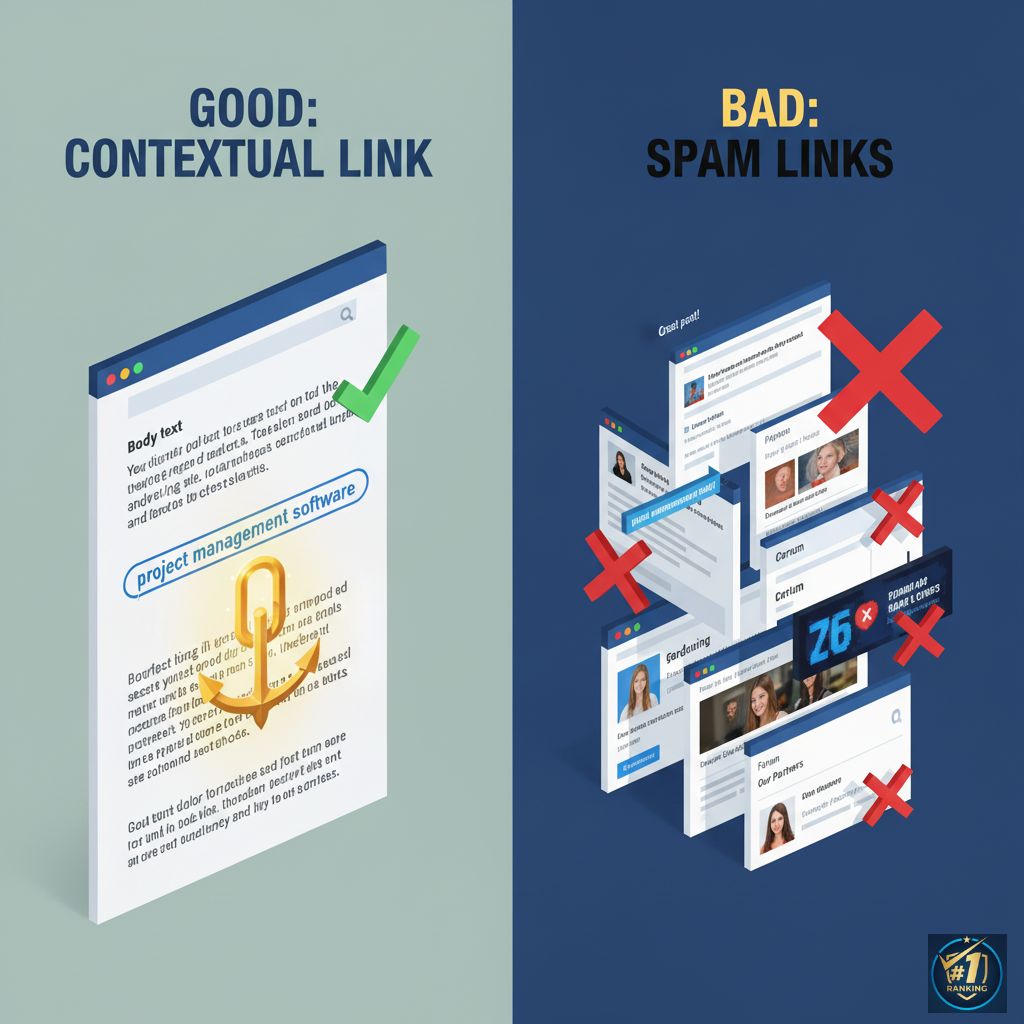
The Good (A True Contextual Link):
Imagine you run a SaaS company that sells project management software. You get a link from a major business blog:
“…As a team’s needs evolve, traditional spreadsheets often break down. This is where dedicated project management software becomes essential, as it can streamline workflows and automate tasks. In fact, a recent study from Earlybird found that teams using specialized software save an average of 10 hours per week…”
This is the holy grail. The link is:
- Editorial: Placed within the flow of the article.
- Relevant: The topic (project management) is a perfect match.
- Authoritative: It cites you as an expert source.
The Bad (Non-Contextual “Spam”):
Here are the links that many low-cost agencies sell you. Google has learned to ignore (or even penalize) these.
- Blog Comments: “Great post! I really learned a lot. We also talk about project management at [Your Link].”
- Forum Profiles: A link on your profile signature in a forum about gardening.
- Footer Links: Your link buried in the footer of a dozen random websites, often under a “Our Partners” or “Blogroll” header that no human ever clicks.
- Sidebar Links: A sitewide link on a blog’s sidebar, sandwiched between ads.
The Gray Area (Better, But Still Not “Contextual”)
- Author Bios: A link in your author bio at the end of a guest post. This is good for branding, but Google knows it’s self-promotional. It carries far less weight than a link within the article itself.
- Directories: A link from a business directory. Useful for “Local SEO” (so Google knows your address and phone number), but it doesn’t build authority or help you rank for competitive keywords.
The key takeaway is simple: Context is the bridge between a link and its value. A link without context is just blue text. A link with context is a powerful signal of trust.
Why Google is Obsessed with Context
To understand why contextual links are so powerful, you have to understand Google’s journey.
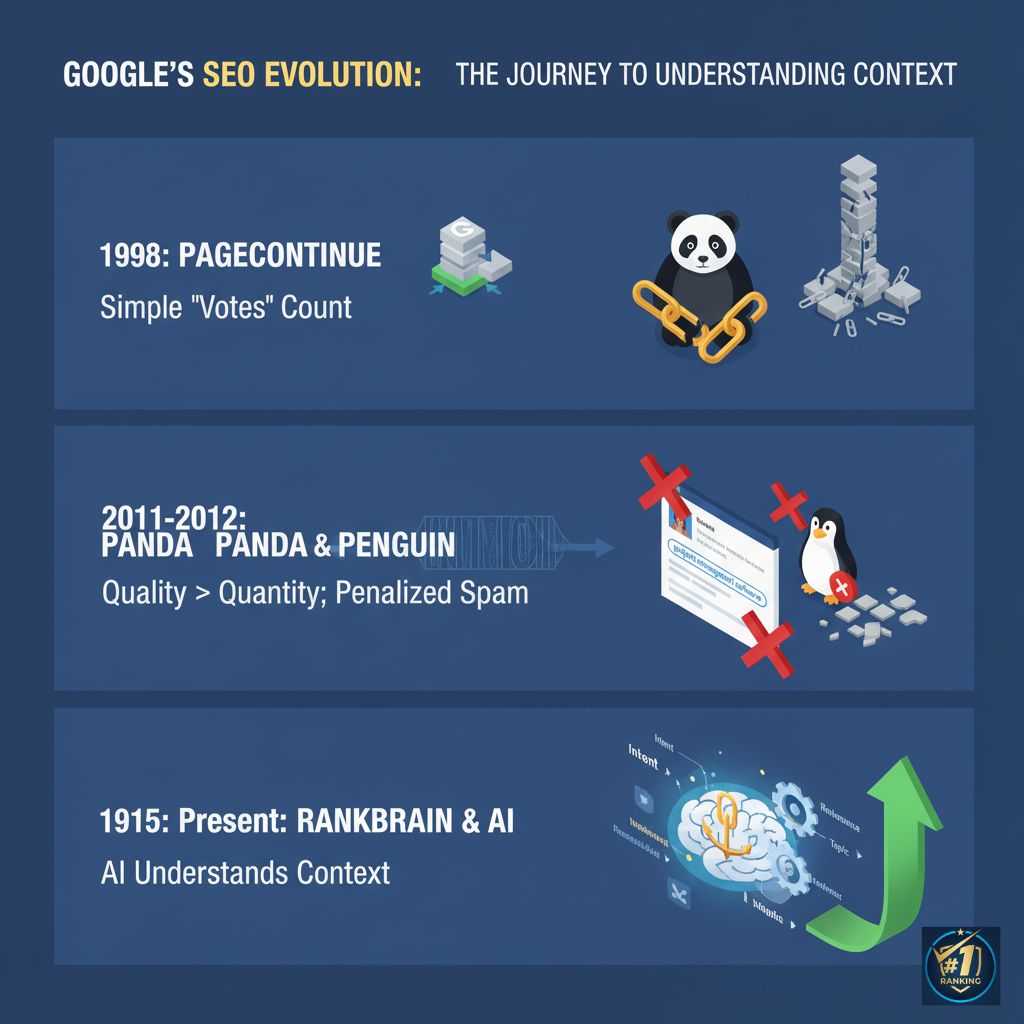
1. The Beginning: PageRank and the “Vote”
In the late 1990s, Google revolutionized search with PageRank. The concept was simple: a link was a “vote.” A page with more votes (links) was more popular and should rank higher.
It was brilliant, but it was also naive. It didn’t take long for spammers to figure out how to “game” the system. They created link farms, automated blog comments, and directory spam. They were “voting” for themselves millions of times.
The search results were terrible. Google had to get smarter.
2. The Great “Spam” Wars: Penguin & Panda
In 2011 and 2012, Google released two major updates—Panda and Penguin—that changed the game forever.
- Panda targeted “thin” or low-quality content on your site.
- Penguin targeted low-quality, spammy backlinks pointing to your site.
Suddenly, those thousands of “free” directory links weren’t just worthless; they were toxic. Websites that had built their rankings on a foundation of spam were wiped from the search results overnight.
Penguin taught the world a hard lesson: The quality of your links matters more than the quantity. And Google’s primary metric for “quality” was becoming clear: relevance.
3. The Modern Era: RankBrain and “Reasonable Surfers”
Today, Google’s algorithm is driven by artificial intelligence (like RankBrain) and semantic understanding. It no longer just matches keywords; it understands topics and intent.
When Google crawls a page, it doesn’t just see a link to rank.co.com. It sees a link to rank.co.com from an article about “Digital PR Strategies,” surrounded by words like “outreach,” “brand mentions,” and “authority.”
The AI concludes: “rank.co.com is an authority on the topic of Digital PR.”
This concept is even baked into Google’s patents. The “Reasonable Surfer” model predicts how likely a user is to actually click a link. A link buried in a footer? 0% chance. A link editorially placed in the middle of a sentence that piques your curiosity? A very high chance.
A contextual link is a link a “reasonable surfer” would click. Therefore, it’s the only link Google truly trusts.
The Litmus Test: Does Your Link Provide Real Value?
This brings us to the core philosophy of modern link building. You should no longer ask, “How can I get a link?”
You must ask, “Does this link deserve to exist?”
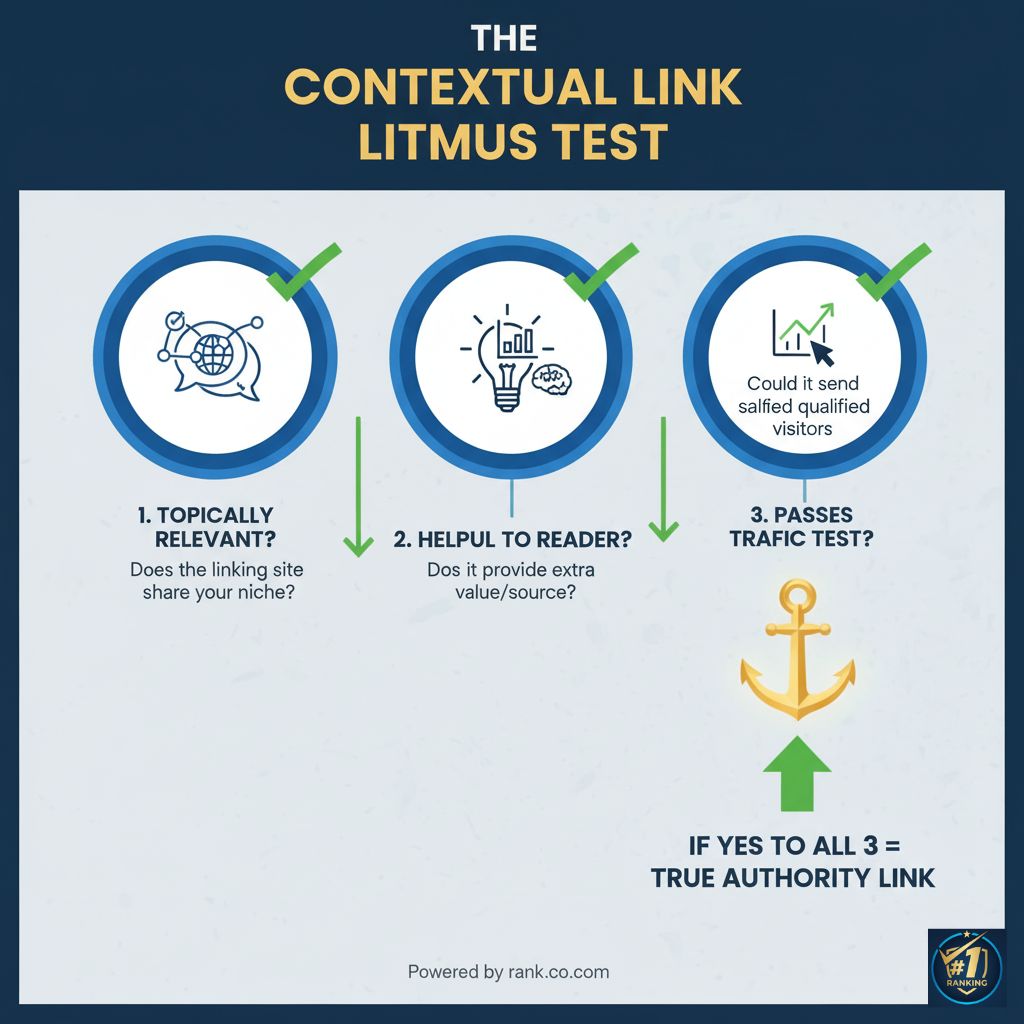
Here is a simple litmus test for any link:
- Is it Topically Relevant? Does the website linking to you talk about the same industry or topics as you? A link from a marketing blog to an SEO agency (us!) is fantastic. A link from a pet grooming blog is, at best, confusing.
- Does it Help the Reader? If a user clicks this link, will they be happy? Did they find the extra information, the source, or the tool they were looking for? Or will they feel tricked, hit their “back” button, and signal to Google that your link was a bad user experience?
- Does it Pass the “Traffic Test”? If Google’s algorithm disappeared tomorrow, would this link still be valuable? A good contextual link from a high-authority site can send you qualified, referral traffic for years. A spammy link will send you nothing.
If you can answer “yes” to these three questions, you have an incredibly valuable asset. If not, you have digital noise.
How to Earn High-Quality Contextual Links (The rank.co.com Philosophy)
You now understand the “what” and the “why.” But how do you actually get these mythical links?
You don’t “get” them. You earn them.
“Free” links (like blog comments) are a waste of time. The most valuable links aren’t “free”—they cost something much more valuable: effort.
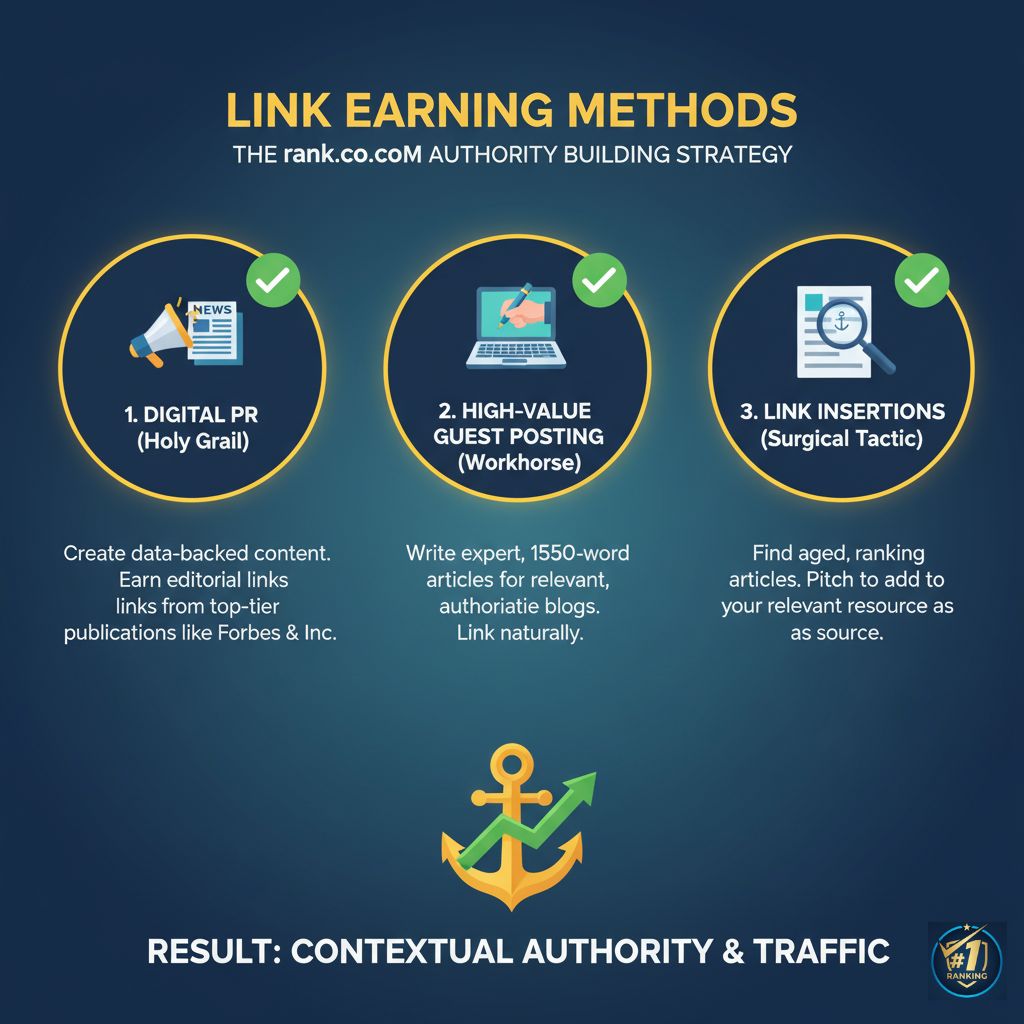
At rank.co.com, our entire strategy is built on earning high-value, contextual links that stand the test of time. Here are the professional methods that actually work.
Method 1: Digital PR (The Holy Grail)
This is the pinnacle of link earning. Instead of asking for links, you create a piece of content so valuable, original, or newsworthy that other websites want to link to it.
- How it works: We partner with a client (let’s say, a SaaS company) to conduct original research. We survey 1,000 office workers and publish a data-backed study: “The True Cost of Inefficient Meetings.”
- The Result: This study contains new, shocking data. We show it to journalists at major business publications. They love new data. Forbes, Inc., and industry blogs write articles about the “meeting crisis” and cite our client’s study as the source.
- Why it’s genius: These are the most powerful contextual links in the world. They come from high-authority domains, are 100% editorially given, and drive massive brand authority and referral traffic.
Method 2: High-Value Guest Posting (The Workhorse)
Guest posting has a bad reputation because it was abused for years. But done correctly, it’s not about spam—it’s about sharing expertise.
- The Wrong Way: Writing a 500-word, low-quality article for any site that will accept it, just to get a link.
- The Right Way:
- Prospecting: We identify a high-authority, highly relevant blog in your niche.
- Pitching: We don’t send a template. We research the editor, understand their audience, and pitch them 3 unique, valuable article ideas that their readers will love.
- Writing: We write an outstanding, 1,500-word, data-driven article that we’d be proud to put on our own site.
- Linking: We place one natural, contextual link to a relevant resource on our client’s blog (not their homepage).
The link is the byproduct of providing genuine value to another site’s audience.
Method 3: Link Insertions (The “Surgical” Tactic)
Sometimes, the perfect place for your link already exists.
- How it works: We find a high-ranking, high-authority article that is already relevant to your service. For example, an article titled “The Top 10 Marketing Trends for 2026.”
- The Problem: We notice their section on “SEO” is good, but it doesn’t mention the importance of Digital PR.
- The Outreach: We contact the editor. “Hi [Editor], I loved your article on marketing trends. I noticed in section 7, you talk about SEO. We just published a deep-dive on how Digital PR is becoming the new standard for building authority, which strongly supports your point. Would you be open to adding it as a resource for your readers?”
- Why it’s genius: If they say yes, we get a hyper-contextual link placed directly into an existing, aged, and authoritative piece of content. This can pass value almost immediately.
Conclusion: Stop Counting Links. Make Your Links Count.
The game has changed. The old SEO playbook of hoarding links, no matter the source, is dead.
Your SEO authority is no longer measured by a number in a spreadsheet. It’s measured by the trust you’ve earned, the quality of your content, and the relevance of the sites that vouch for you.
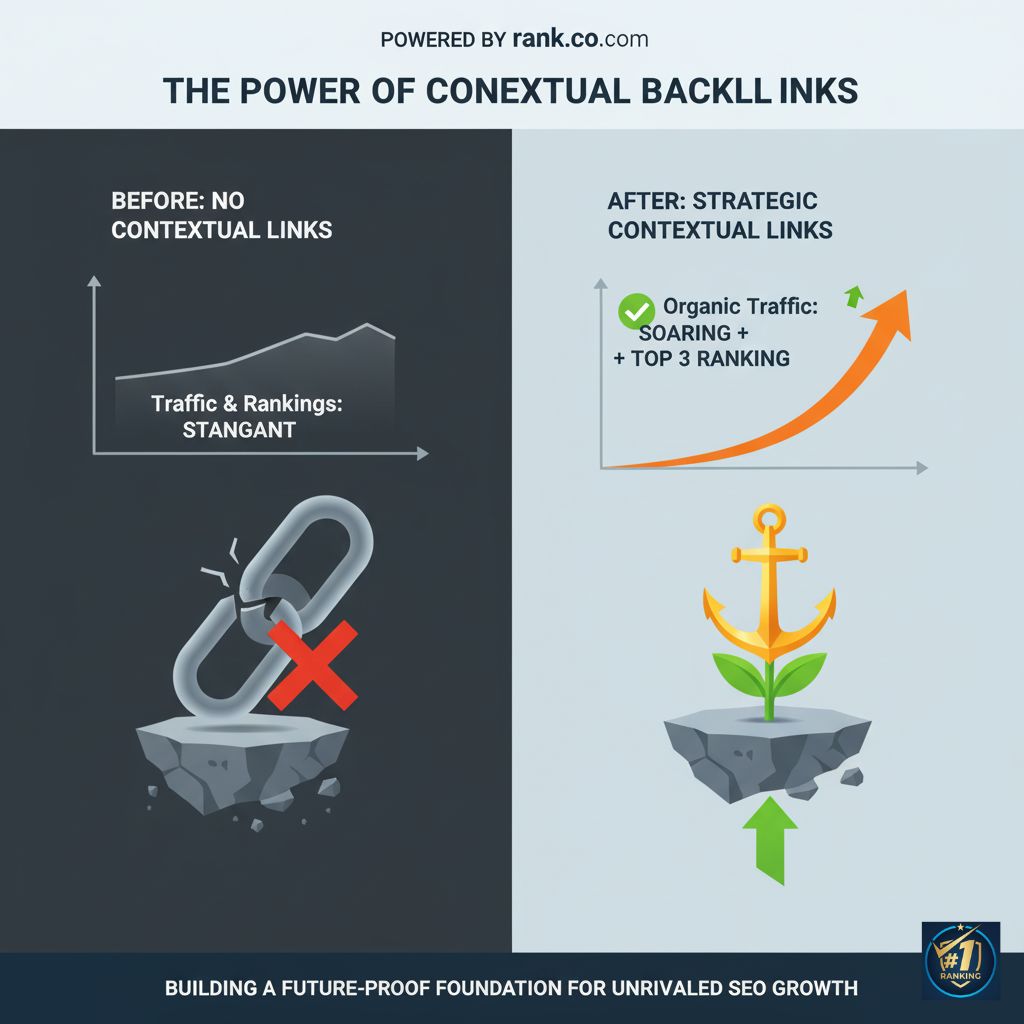
A single, well-placed contextual link from a relevant, high-authority source is worth more than a thousand spammy links from the dark corners of the internet. It’s the difference between building your brand on a foundation of sand and building it on solid rock.
So, the next time someone offers you “100 backlinks,” ask them one simple question:
“How many of them will be contextual?”
The answer will tell you everything you need to know.
About the Author rank.co.com is a specialized agency focused on building real, data-driven authority for brands. We don’t sell links; we earn authority through strategic Digital PR and precision, high-value link earning.
[Ready to build real authority? Talk to us.]